










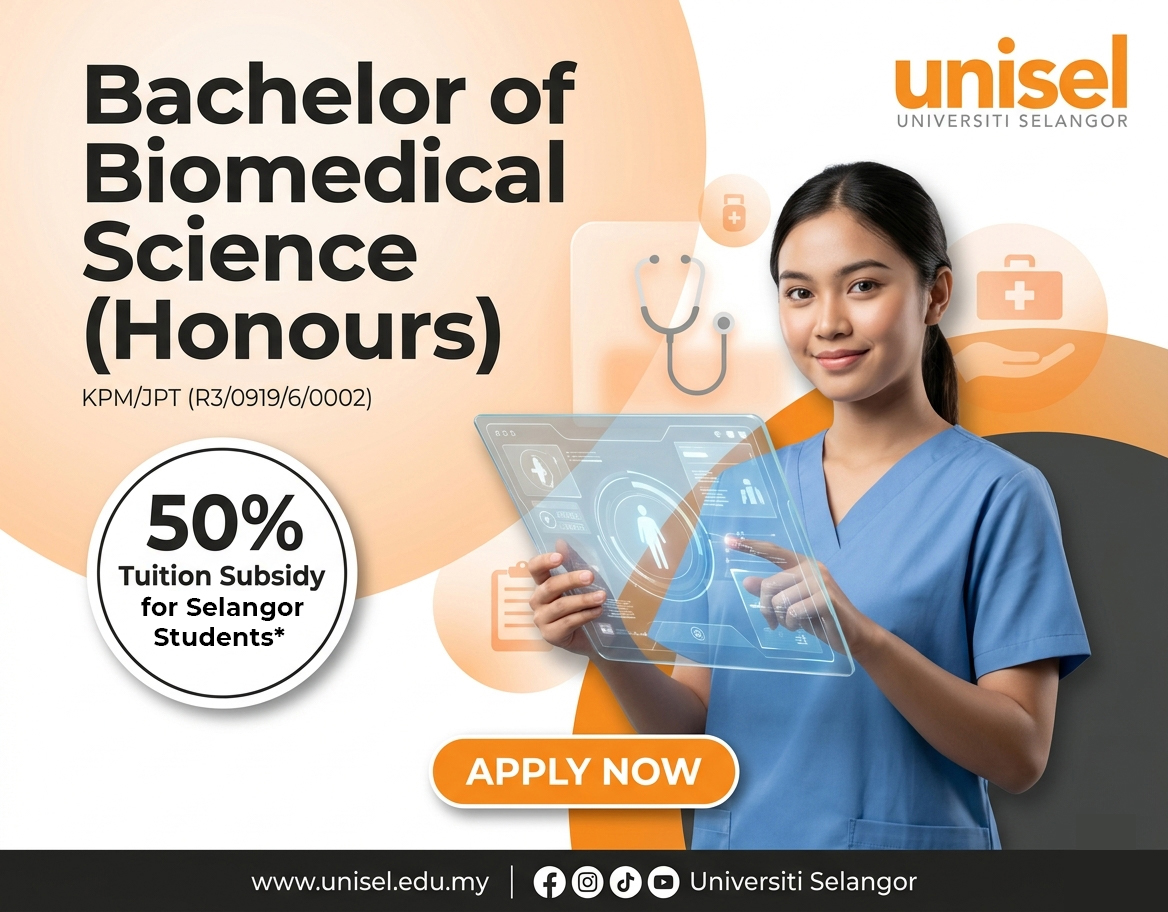
BACHELOR OF BIOMEDICAL SCIENCE (HONOURS)
Programme Description
The Bachelor of Biomedical Science (Honours) programme offers a comprehensive exploration of medical and biological sciences. Through a combination of theoretical coursework and practical laboratory experience, students delve into topics such as human anatomy, physiology, molecular biology, pharmacology, biochemistry, microbiology, haematology, cytology, transfusion science, and blood banking. They gain a deep understanding of the mechanisms underlying disease processes, the principles of diagnostic laboratory procedures, and biomedical research methods. The curriculum emphasizes critical thinking, data analysis, and problem-solving skills, thus preparing students for careers in various sectors of the biomedical field, including research, healthcare, pharmaceuticals, and biotechnology.
- Human anatomy and physiology: Students learn how the structures and function of the human body work collectively to maintain life. These disciplines provide foundational knowledge essential for understanding disease mechanisms, diagnostics, and treatments
- Histology and cytology: Students analyse the normal and abnormal microscopic structure of cells and tissues. These are crucial in identifying cellular/tissue changes in diseases.
- Pharmacology and toxicology: Students study the interaction of drugs with human body systems to produce therapeutic and adverse effects. These areas are important in understanding how substances affect health, guiding safe drug development and regulatory practices.
- Biochemistry: Students explor the chemical processes within living organisms. This helps in the understanding of the development of treatments for diseases at the molecular level.
- Haematology: Students study blood and its components and its related disorders. This is critical in diagnosing and managing blood related disorders through laboratory tests and clinical evaluations.
- Microbiology: Student learn microorganisms including bacteria, viruses, fungi, and parasites, their roles in health and development of diseases. This area is essential for developing vaccines, antibiotics, and understanding infectious diseases.
- Transfusion science and blood banking: Student study blood transfusions and the safe handling of blood products. This area is crucial for ensuring patient safety during surgical procedures or in treating conditions requiring blood products.
- Ethics: This area addresses moral principles guiding research practices, clinical trials, patient care, and the use of biomedical technologies. Ethical considerations ensure that research is conducted responsibly, protecting human subjects’ rights while promoting integrity in scientific inquiry.
- Research and biostatistics: Students learn the fundamentals of research and statistical methods in analysing biological data. They have the opportunity to carry out final year project on biomedical science topics.
- Laboratory instrumentation and management: Students identify, learn the principles and operate laboratory instruments. In addition, they oversee laboratory operations to ensure efficient workflow, quality control, safety compliance, and staff training.
- Local Student:Passed STPM/Matriculation/Pre-University programme with a minimum GPA of 2.33 in two (2) of the following subjects: Biology Physics/Mathematics Chemistry OR, A-Level with minimum Grade D in the following subjects: Biology Physics/Mathematics Chemistry OR, A related Diploma from a recognized institution with a minimum CGPA of 2.75; OR, A related Diploma from a recognized institution with a CGPA lower than 2.75 and a minimum of three (3) years of working experience in the same field. AND, MUET* Band 3. *Exemption from MUET is given to candidates who hold a diploma or foundation programme conducted in English.
- International Student:Proficiency in English (Required if the medium of prior learning was not in English) Pass International English Language Testing System (IELTS) with a minimum score of 5.5 or Test of English as a Foreign Language (TOEFL) with a minimum score of 550
- Local tuition fee: RM55,112
- International tuition fee: RM78,245
- Describe advanced and comprehensive, theoretical, and technical knowledge and demonstrate relevant skills in biomedical science field.
- Apply critical, analytical and evaluation skills in management of complex applications and formulate solutions to problems and unpredictable issues in Biomedical Science.
- Perform and supervise medical laboratory procedures competently; plan, manage and execute quality management system and Good Laboratory Practices (GLP).
- Work together with different people in diverse learning and working communities as well as other groups locally and internationally.
- Present information and findings coherently; and communicate effectively in a well-structured manner to relevant stakeholders.
- Utilize a broad range of information, media, and technology applications to enhance biomedical laboratory practices.
- Utilize and manage numerical and graphical/visual data in biomedical laboratory practices.
- Demonstrate decision making capacities, accountabilities, managing responsibilities and professionalism within broad organizational parameters.
- Apply lifelong learning skills in academic and career development.
- Demonstrate competent entrepreneurial skills and apply broad business and real-world perspectives in the workplace.
- Conform to the ethical and professional code of conduct related to local and global issues in biomedical sciences.
- Describe advanced and comprehensive, theoretical, and technical knowledge and demonstrate relevant skills in biomedical science field.
- Apply critical, analytical and evaluation skills in management of complex applications and formulate solutions to problems and unpredictable issues in Biomedical Science.
- Perform and supervise medical laboratory procedures competently; plan, manage and execute quality management system and Good Laboratory Practices (GLP).
- Work together with different people in diverse learning and working communities as well as other groups locally and internationally.
- Present information and findings coherently; and communicate effectively in a well-structured manner to relevant stakeholders.
- Utilize a broad range of information, media, and technology applications to enhance biomedical laboratory practices.
- Utilize and manage numerical and graphical/visual data in biomedical laboratory practices.
- Demonstrate decision making capacities, accountabilities, managing responsibilities and professionalism within broad organizational parameters.
- Apply lifelong learning skills in academic and career development.
- Demonstrate competent entrepreneurial skills and apply broad business and real-world perspectives in the workplace.
- Conform to the ethical and professional code of conduct related to local and global issues in biomedical sciences.
Other Recommended Programmes








Programme Info
- DURATION: 4 Years
- TUITION FEES:
Local: RM55,112
International:RM78,245 - MQA:
KPM/JPT (R3/0919/6/0002)